Post and Rail Fence Vinyl Systems
Release time:2026-02-08 Click:6
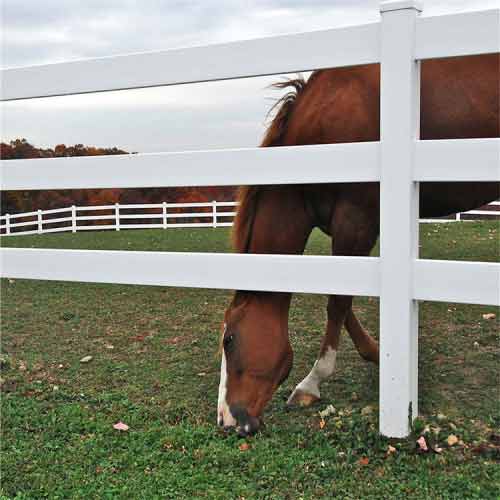
The post and rail fence vinyl system represents the pinnacle of low-maintenance equestrian and agricultural fencing. Unlike traditional wood rails that split and rot, vinyl (PVC) rails are engineered to withstand the harshest elements without degrading. This style of fencing, characterized by horizontal rails slotted into notched posts, offers an open, airy aesthetic that is perfect for pastures, paddocks, and front yards. The smooth surface of the vinyl prevents splinters, making it safe for horses and livestock that might rub against or chew on the rails. For homeowners, the appeal lies in the combination of rustic functionality and modern, hassle-free materials that don't require annual painting or staining.
Structurally, a post and rail fence vinyl relies on the rigidity of the rails and the depth of the post holes. The posts are typically reinforced with steel or aluminum inserts to prevent them from bending under the pressure of leaning animals. The rails are designed with a specific curvature to shed water and resist sagging over long spans. Because vinyl expands and contracts with temperature changes, the installation must include expansion joints or specialized brackets that allow for movement without warping. This "floating" rail system is crucial for maintaining structural integrity across seasons. The notched design allows rails to be stacked in various configurations—two-rail for ponies, three or four-rail for full-sized horses—providing flexibility for different containment needs.
One of the standout features of post and rail fence vinyl is its resistance to biological threats. Wood fences are susceptible to termites, carpenter ants, and wood-boring beetles, which can compromise the fence's stability within a few years. Vinyl, being a synthetic polymer, is completely inedible to insects. It also resists fungal growth and mold, which are common in damp climates. Furthermore, the color is UV-stabilized throughout the material, meaning it won't fade to a chalky gray like painted wood. This color consistency ensures that the fence looks brand new for decades, maintaining the visual appeal of the property without the labor of constant upkeep.
Installation of a post and rail fence vinyl is a straightforward process that can be completed by a competent DIYer or a professional crew in a weekend. The posts are usually set in concrete footings that extend below the frost line to prevent heaving. Because vinyl is lightweight compared to wood or steel, the panels can be lifted and positioned by a single person. The rails simply snap or slide into the pre-drilled holes in the posts, secured with stainless steel screws or locking pins. This modularity means that if a rail gets damaged by a falling branch or a vehicle, it can be replaced individually without dismantling the entire fence line. The lightweight nature also reduces shipping costs and makes handling on-site much safer and easier.
Finally, the economic argument for post and rail fence vinyl is compelling when viewed over a 20-year horizon. While the initial material cost is higher than pressure-treated pine, the elimination of maintenance costs creates significant savings. There is no need to buy paint, stain, brushes, or sealants. There is no labor cost for weekend repairs. The fence simply needs an occasional wash with a garden hose to remove dirt and pollen. For large properties where fencing costs can run into the tens of thousands of dollars, this reduction in lifecycle cost makes vinyl the most financially sound choice. It provides the classic look of a country estate with the performance of modern plastics, ensuring that the boundary remains secure and beautiful for generations.
Previous article:Durable Rural Driveways Split Rail Fence for Farm Properties
Next article:Durable and versatile welding wire mesh solution
Hot products
Mobile: +86 15097722953
Email:metalproducts2021@163.com
Email:1755383270@qq.com