Product details description
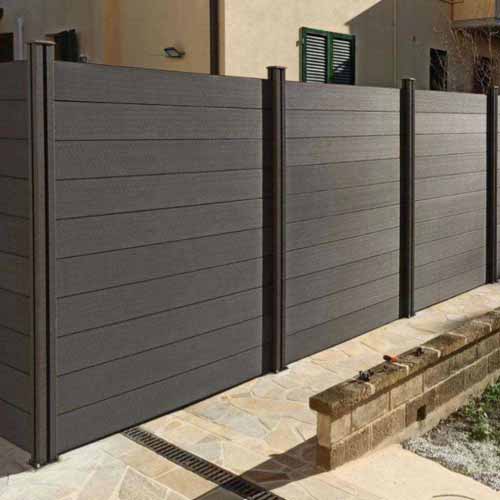
Composite fences, blending recycled wood fibers with thermoplastics such as
polyethylene or PVC, represent a modern advancement in sustainable fencing
solutions that combine the natural aesthetic of wood with the durability and low
maintenance of synthetic materials. Ensuring their structural integrity requires
adherence to rigorous engineering standards that address load-bearing capacity,
thermal expansion, moisture resistance, and long-term dimensional stability.
These standards are developed by industry organizations such as ASTM
International and the American Society of Civil Engineers (ASCE), guiding
manufacturers in producing fences that perform reliably under diverse
environmental and mechanical stresses.
One of the primary challenges in composite fence design is managing thermal
expansion and contraction. Unlike pure wood, which absorbs and releases moisture
gradually, composite materials respond more dynamically to temperature
fluctuations, potentially causing warping, buckling, or joint separation if not
properly engineered. To mitigate this, manufacturers incorporate expansion gaps
between panels, use flexible fasteners that accommodate movement, and formulate
polymer blends with controlled coefficients of thermal expansion. These measures
ensure the fence remains plumb and secure across seasons, resisting distortion
even in regions with extreme temperature swings.
Moisture resistance is another critical factor in maintaining composite
fence integrity. While composites are inherently resistant to rot, mold, and
insect infestation, prolonged exposure to standing water or high humidity can
still affect surface finishes or internal bonding if improperly sealed.
High-quality composite fences undergo multi-stage extrusion processes that
encapsulate wood particles within a waterproof polymer matrix, creating a
homogeneous material that repels water rather than absorbing it. Additional UV
stabilizers and anti-fungal additives further enhance resilience, ensuring color
retention and structural cohesion over decades of outdoor exposure.
Installation practices also influence long-term performance. Posts must be
set in concrete footings or secured with heavy-duty anchors to resist lateral
forces from wind or animal contact. Horizontal rails should be spaced
appropriately to distribute weight evenly, and connections between panels and
posts must use corrosion-resistant hardware rated for outdoor use. Regular
inspections for loose fasteners, surface cracking, or discoloration allow for
early intervention before minor issues escalate. When engineered and installed
correctly, composite fences offer a robust, eco-friendly alternative to
traditional wood or vinyl, delivering lasting beauty and security with minimal
upkeep.
Previous article:
Agricultural Applications of Split Rail Fences
Next article:
Climate Adaptability of Split Rail Fences: Performance in Various Weather Conditions